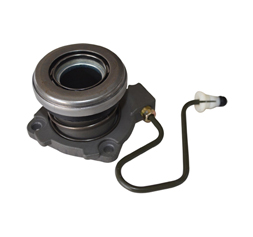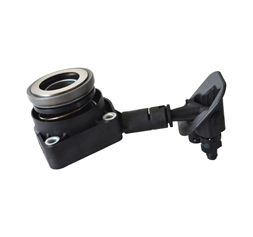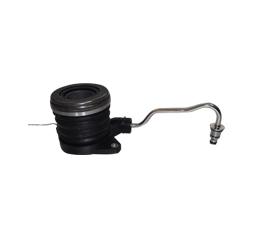

Choosing the right clutch actuator for a commercial vehicle starts with four factors: vehicle and transmission compatibility, actuator type, operating conditions, and product quality. For AMT-equipped trucks, the replacement actuator must also communicate and operate correctly with the vehicle's transmission control system.
Selecting by appearance alone is risky. Two actuators may look similar but have different stroke characteristics, sensors, connectors, pressure requirements, or calibration parameters.
Compatibility should always come first.
Before ordering a replacement, confirm:
Truck manufacturer and model
Vehicle production year
Transmission model
Engine configuration
OE or reference part number
Electrical connector and mounting design
For commercial vehicles from manufacturers such as Volvo, Renault, MAN, and Mercedes-Benz, different transmission generations may require different actuator specifications.
Whenever possible, use the OE number as the primary cross-reference rather than selecting only by vehicle brand.
Commercial vehicles may use pneumatic, electro-pneumatic, hydraulic, or electromechanical actuation systems.
Many heavy-duty AMT applications use a pneumatic or electronically controlled pneumatic automatic clutch actuator. The transmission ECU controls clutch engagement and disengagement according to vehicle speed, engine torque, gear selection, and clutch position.
The replacement unit must therefore match not only the physical clutch but also the vehicle's control architecture.
An incorrect actuator can cause:
Poor clutch engagement
Harsh or delayed shifting
Difficulty starting under load
Diagnostic fault codes
Premature clutch wear
A clutch actuator in a long-haul truck experiences different demands from one installed in a city distribution vehicle.
For vehicles operating with frequent starts, heavy loads, steep gradients, or repeated low-speed maneuvering, actuator response accuracy and durability become especially important.
Fleet operators should evaluate:
Duty cycle: Frequent clutch operation increases wear on valves, seals, sensors, and moving components.
Load conditions: Heavy-duty applications require stable actuator force and accurate clutch engagement.
Operating environment: Temperature, dust, moisture, vibration, and compressed-air quality can influence actuator service life.
For commercial fleets, the lowest purchase price is rarely the best selection criterion. Reliability and reduced downtime usually have a greater impact on total operating cost.
Common symptoms of a failing clutch actuator include:
Jerking or rough gear changes
Delayed clutch engagement
Difficulty selecting a gear
Vehicle hesitation when pulling away
Transmission warning messages
Abnormal actuator noise
Failure to engage or disengage the clutch completely
However, these symptoms can also result from clutch wear, air-pressure problems, wiring faults, sensors, or transmission control issues. Proper diagnosis should be completed before replacing the actuator.
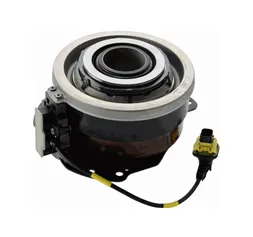
In many commercial vehicle AMT systems, yes.
After installing a new automatic clutch actuator, a diagnostic tool may be required to perform calibration or a clutch teach-in procedure. This allows the control unit to recognize parameters such as actuator travel and the clutch engagement point.
Skipping the required calibration can result in poor starting behavior, rough clutch engagement, fault codes, or incorrect clutch operation.
Always follow the vehicle or transmission manufacturer's installation procedure.
For distributors, repair workshops, and fleet operators, product consistency is as important as compatibility.
Before choosing a supplier, check:
OE cross-reference accuracy
Product testing procedures
Manufacturing quality control
Consistency between production batches
Packaging and transportation protection
Technical support
Warranty terms
Stable supply and delivery capability
A reliable supplier should be able to help verify the correct actuator from the vehicle or OE information before shipment.
The right clutch actuator is not simply the one that fits mechanically. It must match the commercial vehicle's transmission, control system, operating pressure, clutch characteristics, and working environment.
For AMT trucks in particular, accurate OE cross-referencing, dependable manufacturing quality, and correct calibration after installation are essential for smooth shifting and long-term reliability.
KGC supplies clutch actuator solutions for a range of commercial vehicle applications, including Volvo, Renault, MAN, and Mercedes-Benz trucks. Providing complete vehicle, transmission, and OE-number information when requesting a quote can help identify the correct replacement more efficiently.
A clutch actuator automatically engages and disengages the clutch according to commands from the vehicle's transmission control system, allowing an AMT to change gears without manual clutch-pedal operation.
An automatic clutch actuator is an actuator used in automated clutch or AMT systems to control clutch movement automatically. Depending on the vehicle design, it may operate electrically, hydraulically, pneumatically, or through a combination of these technologies.
It is not recommended. Truck model, production year, transmission type, and OE number should all be checked because the same vehicle family may use different transmission and actuator versions.
Yes. Incorrect or incomplete clutch engagement can increase slipping, heat, and mechanical wear. Early diagnosis can help prevent additional drivetrain damage.
Some applications require calibration or a teach-in procedure rather than traditional programming. The exact process depends on the transmission and vehicle manufacturer.
 English
 Español
 português